
FeatureLiverpool and Borussia Dortmund's connections
Separated by hundreds of miles, different languages and distinct football cultures, the Reds and the Black and Yellows nevertheless mirror each other in passion, history and working‑class identity.
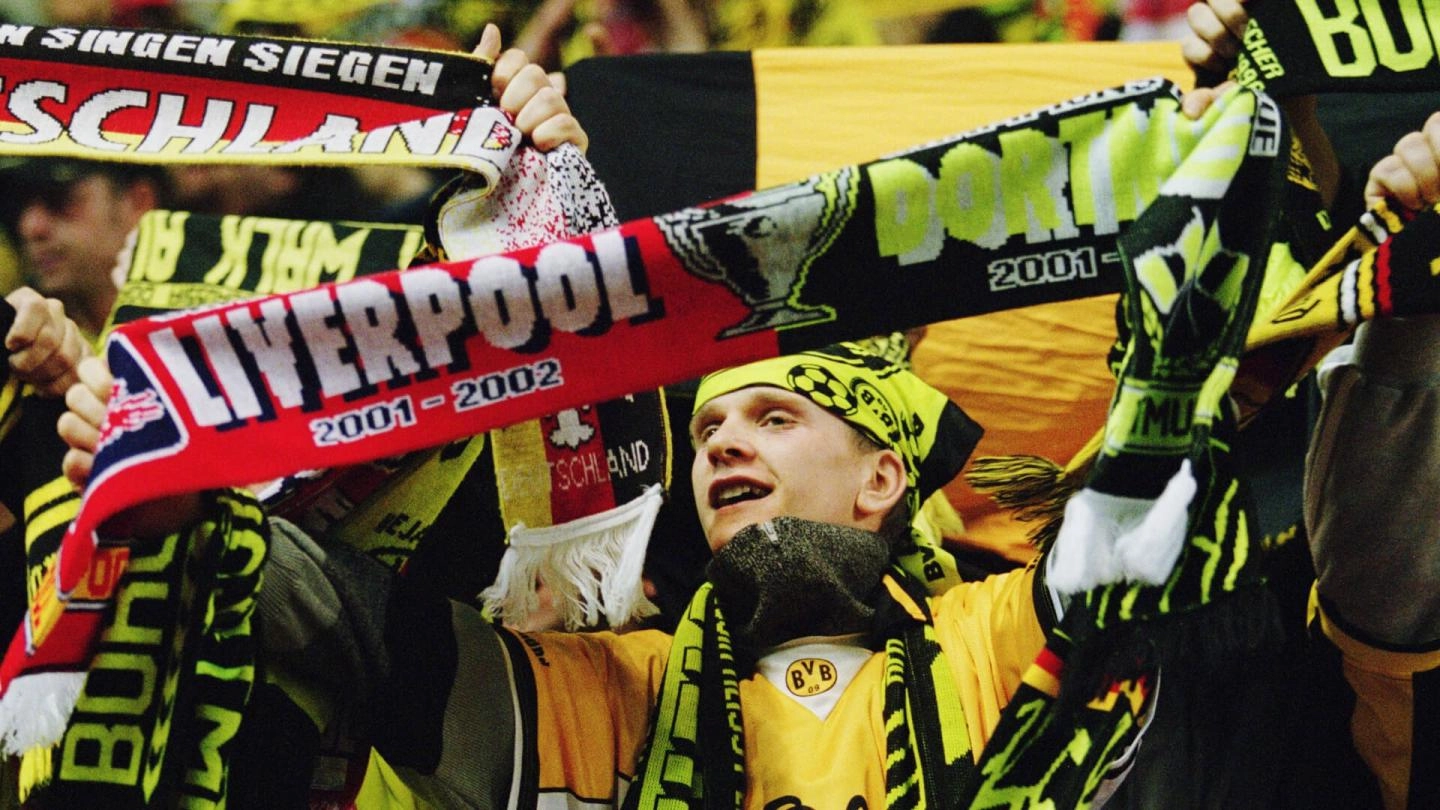
And over the years, there have been matches, players, a manager and a song shared between the teams on Merseyside and in Germany...
A tale of two cities
Known across the world as a proud and resilient port city, Liverpool has built its identity on the back of generations of workers. Its docks once drove the British economy, shaping a close community spirit that still thrives today.
A raft of landmarks – such as the Liver Building, St George’s Hall and the Cavern Club, to name a handful – house the stories of music, industry and culture in a city that oozes creativity.
And then there is the football, always the football.
For those sworn to red rather than blue, Anfield is home. A shrine, Bill Shankly once called it.
On matchdays, thousands gather to sing, shout and support their club. Songs about heroes, European glory and unbreakable unity. Football is life.
Dortmund may sit in another country, but in many of those ways it is much the same.
Located in North Rhine-Westphalia, it was once a powerhouse of coal and steel, shaped by industrial labour and the grit of everyday workers. Though the industries have changed, the values remain. Dortmund’s people are warm, loyal and deeply connected to their football club.
The architecture of Dortmund – from Bodelschwingh castle to the theatrical Opera House, to the modern city square – blends its medieval roots with newer vibrancy.
Yet its most iconic structure is undoubtedly the Westfalenstadion, home to the incredible ‘Yellow Wall’, one of the most awe‑inspiring sights in world football.
Standing in that 25,000‑strong terrace, supporters create a symphony of chants and displays much like Anfield’s sacred Kop.
The stadium is also where the Reds won the UEFA Cup for the third time, clinching victory in extra-time in a 5-4 thriller against Spanish side Alaves in the 2001 final.
A first encounter 60 years ago
Liverpool and BVB first faced each other competitively in the 1966 European Cup Winners’ Cup final in Glasgow.
For both clubs, it was an historic moment: their first European final, filled with anticipation and hope.
The match was a tense and thrilling encounter that saw the Germans get the better of the Reds at Hampden Park, pipping Shankly’s side 2-1 in extra-time.
A looping effort from Stan Libuda hit the post and went over the line off the unfortunate Ron Yeats.
Some tales insist the reason Dortmund were able to score the decisive goal was due to the shape of the goalframe being square rather than rounded.
And since then…
It would be 35 years until their paths crossed again, this time in the Champions League group stage of 2001-02.
After a 0-0 draw in Germany, the return fixture at Anfield saw Vladimir Smicer and Stephen Wright score to get Liverpool a 2-0 victory over Dortmund.
The most recent time they took each other on, a European classic occurred.
In the Europa League quarter-finals of 2016, Liverpool held on to a 1-1 draw in Dortmund, where the goals came from Divock Origi and Mats Hummels.
In the decisive second leg back at Anfield, the visitors led 2-0 and 3-1 but the Reds summoned a special comeback to win 4-3, Dejan Lovren settling it with a header in front of the Kop in the 91st minute.
The Klopp connection
Jürgen Klopp spent seven successful years at Dortmund and became a legend at the Bundesliga team, leading them to two league titles, a German cup and a Champions League final.
Five months after waving farewell to BVB, he took charge of Liverpool in October 2015, where he became equally adored.
Once again, Klopp’s charisma, passion and football philosophy laid the foundations for great success, with the Reds winning seven major trophies during his reign, including the European Cup and the club’s first league championship for 30 years.
Wearing red, black and yellow
Two players have transferred directly between the clubs, in both cases from the Ruhr to the Reds.
Patrik Berger was the first, signing for Liverpool in the summer of 1996, and Karl-Heinz Riedle travelled the same path a year later.
Others to have represented both teams include Emre Can, Philipp Degen, Nuri Sahin and now Alexander Isak.
And a shared anthem
You’ll Never Walk Alone is more than a song to both clubs.
Embraced by Kopites following a No.1 hit cover by Gerry and the Pacemakers in the 1960s, it is as much an ethos as it as an anthem for supporters.
Dortmund, meanwhile, adopted YNWA after Pur Harmony released a cover version in 1996.
Today, it is a powerful and emotional precursor at Anfield and Signal Iduna Park ahead of every match.
- This article was written by a mentee in LFC Foundation’s mentorship programme, which is funded by the Premier League and PFA Players’ Fund.
Media watchLiverpool in three-club race to sign West Ham star
NewsJamie Webster and Brad Kella to perform live at LFC Foundation Gala Ball
AcademyWatch U18s highlights: Derby County 4-3 Liverpool
ClubLocal schoolgirls meet LFC Women squad at AXA Melwood Training Centre
LFC releases images of permanent memorial in honour of Diogo Jota and André Silva