

Past managersBill Shankly
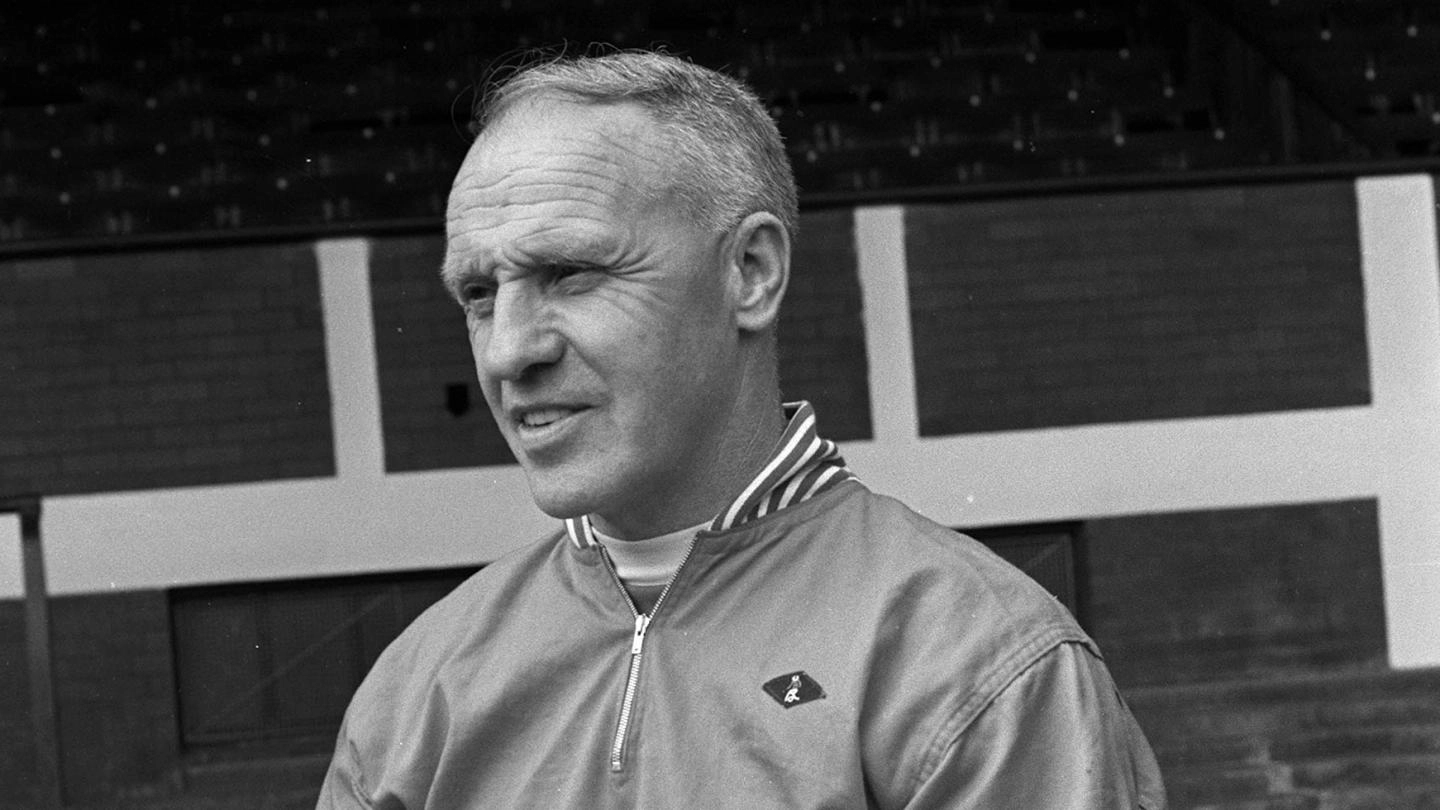
Years: 1959-1974
Matches: 784
Honours: League title (1963-64, 1965-66, 1972-73), FA Cup (1965, 1974), UEFA Cup (1973), Second Division (1961-62)
Bill Shankly is arguably the most famous figure in Liverpool FC's illustrious history.
A charismatic man who realised his dream of turning the Reds into English football's most dominant force, the Scot's spirit has quite rightly been enshrined in the very foundations of the club.
His name is synonymous with the very meaning of 'the Liverpool way' and it is his legacy that has seen the Reds go on to conquer at home and in Europe.
And yet, such glory was way beyond even the most optimistic Kopites' dreams when Shankly was appointed as Liverpool manager on December 1, 1959.
As the final whistle blew on his first match in charge 18 days later, the prospect of Shankly's new side, languishing in 10th place in Division Two, going on to one day boast a record of three First Division championships, one Division Two title, two FA Cups and one UEFA Cup must have seemed little more than a pipe dream.
A 4-0 hammering at home to Cardiff City left a man who was already notorious for his outspoken comments and memorable quotes searching for the words to explain what he had just witnessed and what he must do to rectify the current state of affairs.
But mighty oaks from little acorns grow...
Shankly knew the team needed an injection of inspiration, determination and desire to match his own, and he would go on to mould a team to mirror the same winning mentality and hunger for silverware he had from an early age.
Born into a family of 10 in the Ayrshire mining village of Glenbuck, where conditions were harsh, Shankly had found solace in his ultimate passion and would inevitably go on to realise his dream of becoming a professional footballer.
For him, football in Glenbuck was the elixir of life, a blessed relief from the toil of the mineshaft.
It set him on a path that would see him take leave from the town of his roots, and in 1932 he signed forms with Carlisle United. Within a year, he had moved onwards and upwards to Deepdale, home of Preston North End, as he carved out a distinguished playing career at wing-half that brought seven caps for Scotland.
Unfortunately, the prime of his playing life would be disrupted by war in 1939 and when the 1946-47 season kick-started organised professional football again in England, Shankly was 33.
It was time to decide what he would do with the rest of his life and it was no surprise that his addiction to the beautiful game meant sights were focused - in true Shankly style - on becoming the greatest football manager of all time.
He had already grown accustomed to what seemed like an obligatory boardroom battle as his 10-year managerial career prior to taking over in the Anfield hot-seat saw him earn his spurs with the likes of Carlisle, Grimsby, Workington and finally Huddersfield Town.
At each club he grew frustrated by the board's inability to match his own ambition and it was this single-minded approach and a lack of financial backing that saw him walk out on both Carlisle, the club who had given him his chance as a young player, and Grimsby.
This devotion to winning led T.V. Williams to take a keen interest in the man who had at that point been more recognised for his quick wit and acid tongue than for his success on the pitch.
Shankly's ambition had been obvious when he interviewed for the Reds job in 1951 and although the club felt he was not the right man at the time, he had made enough of an impression to ensure that when the job came up again, he would be the only candidate.
Languishing in the old Second Division, with a crumbling stadium, poor training facilities and an unwieldy playing staff, the challenge facing Shankly at Liverpool was enormous.
But typically, it was one he relished, and after realising the need to dramatically transform the club from head-to-toe, he dispensed with the services of 24 members of the squad.
He had the good fortune, though, to inherit an experienced and resourceful backroom staff in the shape of Bob Paisley, Joe Fagan and Reuben Bennett - a group that would form the famous Boot Room.
With this in his armoury, slowly but surely Shankly's Liverpool began to move forward.
The Anfield crowd sensed the change. Gates regularly topped 40,000 and promotion to the top flight was imminent.
The initial stage of Shankly's rebuilding programme had taken shape, thanks in large part to the signing of two key players in Ron Yeats and Ian St John.
Both were Scottish warriors, men who embodied the ethos that would become symbolic of Liverpool under Shankly and the example by which all future recruits would be measured.
The foundations were now in place and the Reds romped away with the Second Division title in 1961-62, finishing eight points clear of their nearest rivals and amassing an impressive 62 points.
All this was accomplished in the days when two points were awarded for a win and, perhaps more significantly, they achieved it all with real attacking verve - scoring 99 goals in the process.
Having realised his initial target of leading Liverpool back into the top flight, Shankly set about addressing an issue much closer to home: Everton.
The Blues were firmly established as the No.1 side in the city of Liverpool at the time and the boss was not content to let the Toffees retain the bragging rights for much longer.
Most sides would be content with consolidation in their first season back among the best, but not Liverpool.
By the end of the 1963-64 campaign he had led the Reds to the title - savouring the moment as reigning champions Everton were forced to hand over the trophy.
It set the tone for the rest of Shankly's reign and led him famously to claim: "There are only two sides in Liverpool. Liverpool and Liverpool reserves."
The title was just reward for years of hard work behind the scenes, where Shankly introduced the five-a-side games that so defined his football thinking at a completely revamped Melwood.
Pass and move, keep it simple; a creed taken from the daily matches played by the miners of Glenbuck all those years ago.
His success was built upon a new routine whereby the players would meet and change for training at Anfield and then board the team bus for the short trip to Melwood. After the session, they would all bus back together and perhaps get a bite to eat.
This way, Shankly ensured all his players had warmed down correctly and he would keep them free from injury. It was also a routine that instilled a tremendous team spirit.
Next ticked off the list was the FA Cup, which the club had never won, leading some to claim a curse afflicted the Reds in the competition.
If it were ever true, Shankly was the man to break it, a 2-1 extra-time win over Leeds United at Wembley in May 1965 finally clinching the coveted trophy.
In the 1965-66 season, his side finished as league champions again. He used just 14 players, and two of those only featured in a handful of games.
There were some magical European exploits across the continent, too, Shankly leading Liverpool to the European Cup semi-finals in 1964-65.
He had found his spiritual home, perfectly in tune with supporters, knowing and understanding how they felt about football and the pride a successful team gave them.
His love affair with the Liverpool people is best summed up by the great man himself when he declared: "I'm just one of the people on the Kop..."
While all good things must come to an end, the decline of the great 1960s team was not the end for Shankly, who set about constructing his second stellar Liverpool side.
Out went Roger Hunt, St John, Yeats and Tommy Lawrence, and in came Kevin Keegan, Steve Heighway, Larry Lloyd and Ray Clemence.
A first European trophy arrived in 1973, in the form of the UEFA Cup, a much-heralded success that was won in tandem with the club's eighth league title - Shankly's third at the helm.
In 1974 the FA Cup returned to Anfield after a breathtaking Wembley performance in defeating Newcastle United 3-0.
Shankly had reached for the stars and made his dreams a reality. He was at the pinnacle of his profession, a man exuding charisma and a manager who was deservedly worshipped by his loyal followers in the stands.
And so the events that transpired on a warm July day in 1974 would rock not just the foundations of the club but the entire football world.
Shankly tendered his resignation, citing the reason that, at the age of 60, he wanted to spend more time with his wife Ness and their family.
The fact he left the club on a high and in such capable hands speaks volumes.
But how do you follow Shankly?
The answer would be found within the mythical walls of his famous Boot Room, the modest figure of Paisley providing an almost seamless transition from coach to boss.
There is no doubt that Paisley's era as manager would prove more fruitful than Shankly's in terms of trophies won. Some may also suggest that much of what Shankly achieved would not have been possible without Paisley's calm influence and knowledge of the game.
But it is equally likely that without the driving force and sheer charisma of Shankly, Liverpool's spell in the doldrums in the 1950s would have reached long into the '60s.
And perhaps Paisley would never have become manager at all.
Shankly's legacy will live on eternally, and when he died unexpectedly in September 1981 after suffering a heart attack, his loss was greatly mourned by both Liverpool and the football family.
In the years following his resignation, to the disbelief of the fans, relations between him and the club he so loved had become somewhat strained. But there was no such problem on the terraces.
In the first game at Anfield following his funeral, a huge banner was unfurled on the Kop that read 'Shankly Lives Forever'.
To this day, he remains immortalised in a physical sense at the stadium in the form of an iconic statue and the Shankly Gates named in his honour.