

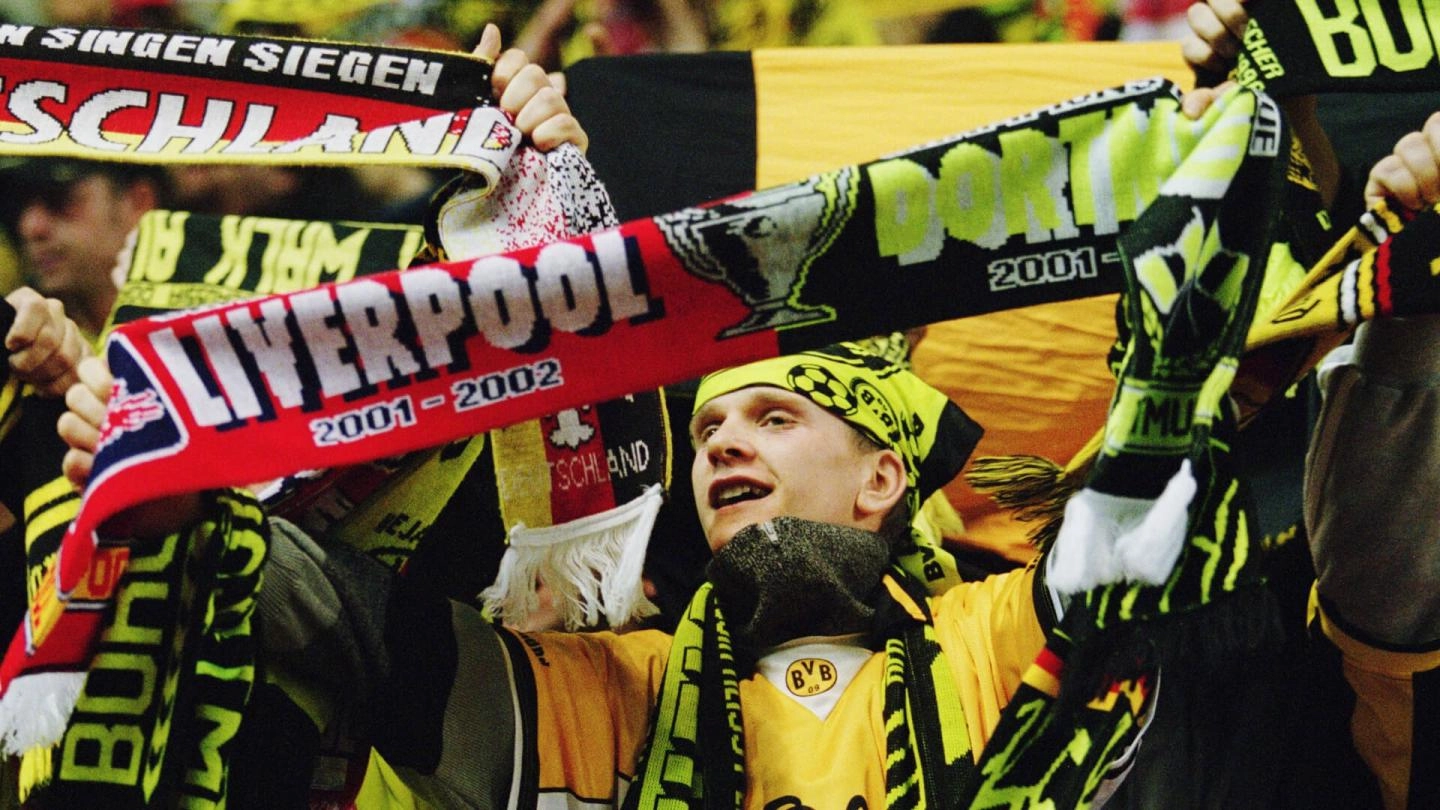
機能リバプールとボルシア・ドルトムントのつながり


リバプールFCのレジェンドが土曜日にボルシア・ドルトムントをホストする予定なので、長年にわたってクラブを結びつけてきたつながりを探ります。
Separated by hundreds of miles, different languages and distinct football cultures, the Reds and the Black and Yellows nevertheless mirror each other in passion, history and working‑class identity.
And over the years, there have been matches, players, a manager and a song shared between the teams on Merseyside and in Germany...
You have to accept cookies in order to view this content on our site.
Watch on YouTubeA tale of two cities
Known across the world as a proud and resilient port city, Liverpool has built its identity on the back of generations of workers. Its docks once drove the British economy, shaping a close community spirit that still thrives today.
A raft of landmarks – such as the Liver Building, St George’s Hall and the Cavern Club, to name a handful – house the stories of music, industry and culture in a city that oozes creativity.
And then there is the football, always the football.
For those sworn to red rather than blue, Anfield is home. A shrine, Bill Shankly once called it.
On matchdays, thousands gather to sing, shout and support their club. Songs about heroes, European glory and unbreakable unity. Football is life.
Dortmund may sit in another country, but in many of those ways it is much the same.
Located in North Rhine-Westphalia, it was once a powerhouse of coal and steel, shaped by industrial labour and the grit of everyday workers. Though the industries have changed, the values remain. Dortmund’s people are warm, loyal and deeply connected to their football club.
The architecture of Dortmund – from Bodelschwingh castle to the theatrical Opera House, to the modern city square – blends its medieval roots with newer vibrancy.
Yet its most iconic structure is undoubtedly the Westfalenstadion, home to the incredible ‘Yellow Wall’, one of the most awe‑inspiring sights in world football.
Standing in that 25,000‑strong terrace, supporters create a symphony of chants and displays much like Anfield’s sacred Kop.
The stadium is also where the Reds won the UEFA Cup for the third time, clinching victory in extra-time in a 5-4 thriller against Spanish side Alaves in the 2001 final.
60年前の初対戦
。リバプールとBVBは、1966年にグラスゴーで行われたヨーロピアンカップウィナーズカップ決勝で初めて対戦しました
。両クラブにとって、これは歴史的な瞬間でした。期待と希望に満ちた初めてのヨーロッパ決勝戦でした。
この試合は緊迫したスリリングな試合だった。ハンプデン・パークでドイツ代表がレッズに勝ち、延長戦でシャンクリーのチームを2-1で下した。
スタン・リブダのループのシュートがポストに当たり、不幸なロン・イェイツがラインを越えた。
ドルトムントが決定的なゴールを決めた理由は、ゴールフレームの形が丸いのではなく正方形だったからだと主張する話もある。
そしてその後...
彼らの道が再び交差するまでには35年かかった。今度は2001-02年のチャンピオンズリーグのグループステージだ
。ドイツで0対0で引き分けた後、アンフィールドでの再戦ではウラジミール・シュミサーとスティーブン・ライトが得点し、リバプールはドルトムントに2-0で勝利した。
彼らが対戦した直近では、ヨーロピアン・クラシックが開催されました。
You have to accept cookies in order to view this content on our site.
Watch on YouTube2016年のヨーロッパリーグ準々決勝では、リバプールがドルトムントで1-1で引き分けになり、ディボック・オリギとマッツ・フンメルスがゴールを決めました。
アンフィールドでの決定的なセカンドレグでは、ビジターが2-0と3-1でリードしたが、レッズは特別なカムバックを呼んで4-3で勝利した。デヤン・ロヴレンは91分にコップの前でヘディングを決めて決着をつけた。
クロップとのつながりユルゲン・クロップはドルトムントで7年間成功を収め
、ブンデスリーガチームのレジェンドとなり、ドイツカップとチャンピオンズリーグ決勝の2つのリーグタイトルを獲得しました。
BVBに別れを告げてから5か月後、彼は2015年10月にリバプールの監督に就任し、リバプールでも同様に愛されるようになりました。
再び、クロップのカリスマ性、情熱、そしてサッカー哲学は大成功の基礎を築きました。彼の在位中、レッズはヨーロピアンカップやクラブにとって30年ぶりのリーグ優勝など、7つのメジャートロフィーを獲得しました。
赤・黒・黄の装備 2人の選手がクラブ間を直接移籍しており
、いずれもルール地方からレッズへ移籍している
。1996年の夏、最初にリバプールと契約したのはパトリック・ベルガーで、その1年後にはカール・ハインツ・リードルも同じ道を歩みました。
両チームを代表した他の選手には、エムレ・カン、フィリップ・デゲン、ヌリ・サヒン、そして現在はアレクサンダー・アイザックが含まれます。
そしてアンセム「ユー・ネヴァー・ウォーク・アローン」は、両クラブにとって単なる歌ではありません
。1960年代にジェリーとペースメーカーがカバーしたナンバーワンのヒット曲に続いてコピテスに受け入れられたこの曲は、サポーターの国歌であると同時に精神でもあります。
一方、ドルトムントは、1996年にピュア・ハーモニーがカバーバージョンをリリースした後、YNWAを採用しました。
今日では、アンフィールドとシグナル・イドゥナ・パークでは毎試合に先駆けて、パワフルで情緒溢れる前兆となっています。
- この記事は、プレミアリーグとPFAプレーヤーズ・ファンドから資金提供を受けているLFC財団のメンターシップ・プログラムのメンティーが執筆したものです。