

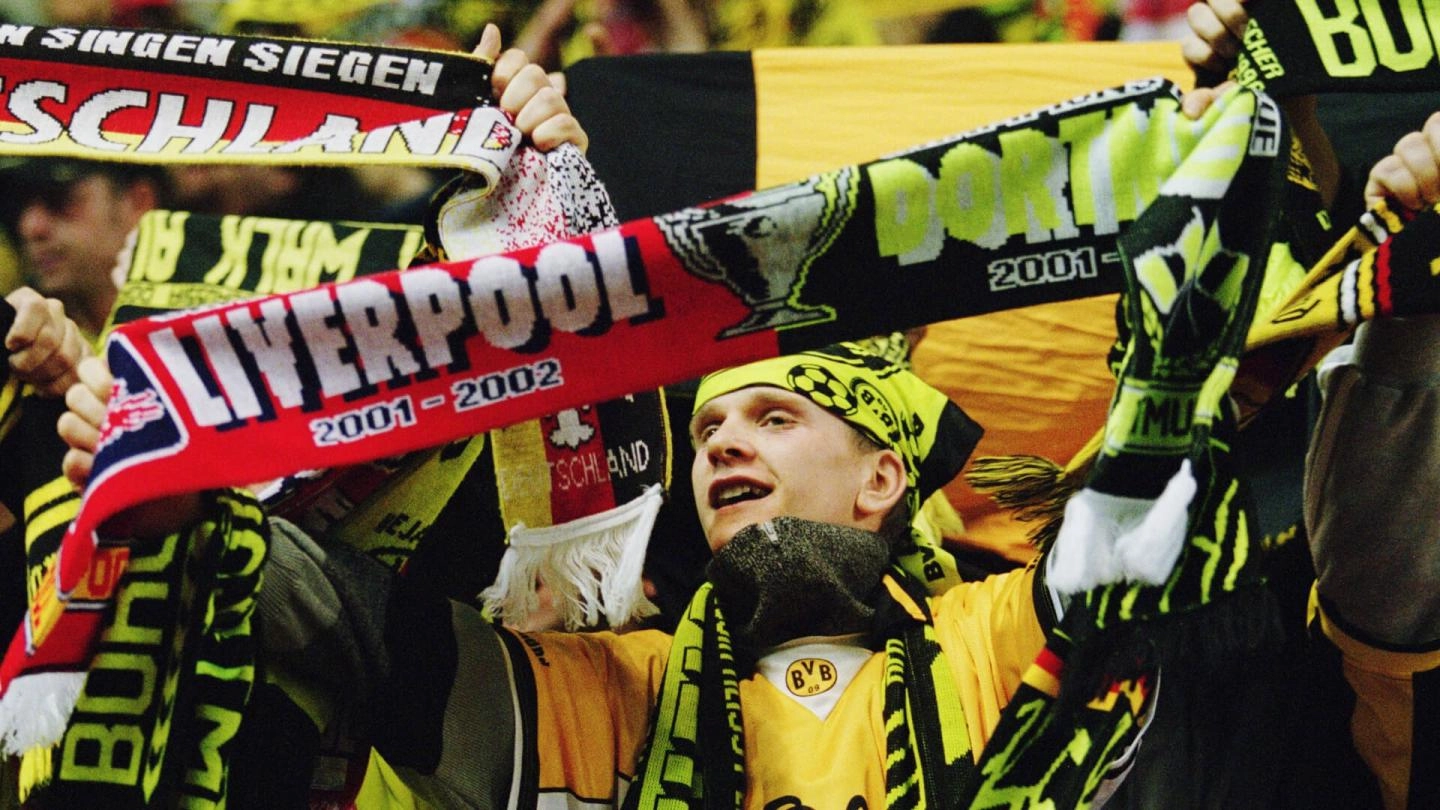
CaratteristicaI collegamenti tra Liverpool e Borussia Dortmund


Mentre il Liverpool FC Legends si prepara ad ospitare il Borussia Dortmund sabato, esploriamo i legami che hanno unito i club nel corso degli anni.
Separated by hundreds of miles, different languages and distinct football cultures, the Reds and the Black and Yellows nevertheless mirror each other in passion, history and working‑class identity.
And over the years, there have been matches, players, a manager and a song shared between the teams on Merseyside and in Germany...
You have to accept cookies in order to view this content on our site.
Watch on YouTubeA tale of two cities
Known across the world as a proud and resilient port city, Liverpool has built its identity on the back of generations of workers. Its docks once drove the British economy, shaping a close community spirit that still thrives today.
A raft of landmarks – such as the Liver Building, St George’s Hall and the Cavern Club, to name a handful – house the stories of music, industry and culture in a city that oozes creativity.
And then there is the football, always the football.
For those sworn to red rather than blue, Anfield is home. A shrine, Bill Shankly once called it.
On matchdays, thousands gather to sing, shout and support their club. Songs about heroes, European glory and unbreakable unity. Football is life.
Dortmund may sit in another country, but in many of those ways it is much the same.
Located in North Rhine-Westphalia, it was once a powerhouse of coal and steel, shaped by industrial labour and the grit of everyday workers. Though the industries have changed, the values remain. Dortmund’s people are warm, loyal and deeply connected to their football club.
The architecture of Dortmund – from Bodelschwingh castle to the theatrical Opera House, to the modern city square – blends its medieval roots with newer vibrancy.
Yet its most iconic structure is undoubtedly the Westfalenstadion, home to the incredible ‘Yellow Wall’, one of the most awe‑inspiring sights in world football.
Standing in that 25,000‑strong terrace, supporters create a symphony of chants and displays much like Anfield’s sacred Kop.
The stadium is also where the Reds won the UEFA Cup for the third time, clinching victory in extra-time in a 5-4 thriller against Spanish side Alaves in the 2001 final.
Un primo incontro 60 anni fa
Liverpool e BVB si affrontarono per la prima volta in modo competitivo nella finale di Coppa delle Coppe del 1966 a Glasgow
.Per entrambi i club è stato un momento storico: la loro prima finale europea, piena di aspettative e speranze.
La partita è stata una partita tesa ed emozionante che ha visto i tedeschi avere la meglio sui Reds ad Hampden Park, battendo la squadra di Shankly per 2-1 nei tempi supplementari.
Un colpo in loop di Stan Libuda colpisce il palo e supera il traguardo dallo sfortunato Ron Yeats.
Alcuni racconti sostengono che il motivo per cui il Dortmund è stato in grado di segnare il gol decisivo sia dovuto alla forma del telaio della porta che era quadrata anziché arrotondata.
E da allora...
Sarebbero passati 35 anni prima che le loro strade si incrociassero nuovamente, questa volta nella fase a gironi di Champions League del 2001-02
.Dopo lo 0-0 in Germania, la partita di ritorno ad Anfield ha visto i gol di Vladimir Smicer e Stephen Wright e il Liverpool si è imposto per 2-0 sul Dortmund.
L'ultima volta che si sono affrontati, si è svolta una classica europea.
You have to accept cookies in order to view this content on our site.
Watch on YouTubeNella decisiva gara di ritorno ad Anfield, gli ospiti erano in vantaggio per 2-0 e 3-1, ma i Reds hanno ottenuto una rimonta speciale vincendo 4-3, con Dejan Lovren che ha pareggiato con un colpo di testa davanti al Kop al 91'.
Il legame con Klopp
Jürgen Klopp ha trascorso sette anni di successi al Dortmund ed è diventato una leggenda nella squadra di Bundesliga, portandoli a due scudetti, una Coppa di Germania e una finale di Champions League.
Cinque mesi dopo aver detto addio al BVB, nell'ottobre 2015 ha preso la guida del Liverpool, dove è diventato altrettanto adorato.
Ancora una volta, il carisma, la passione e la filosofia calcistica di Klopp hanno gettato le basi per un grande successo, con i Reds che hanno vinto sette trofei importanti durante il suo regno, tra cui la Coppa dei Campioni e il primo campionato del club dopo 30 anni.
Vestiti di rosso, nero e giallo
Due giocatori si sono trasferiti direttamente tra i club, in entrambi i casi dalla Ruhr ai Reds
.Patrik Berger è stato il primo, ha firmato per il Liverpool nell'estate del 1996, e Karl-Heinz Riedle ha percorso la stessa strada un anno dopo.
Tra gli altri che hanno rappresentato entrambe le squadre figurano Emre Can, Philipp Degen, Nuri Sahin e ora Alexander Isak.
E un inno condiviso You'll
Never Walk Alone è
più di una canzone per entrambi i club.Abbracciato dai Kopites dopo una cover di successo numero 1 di Gerry and the Pacemakers negli anni '60, è tanto un ethos quanto un inno per i tifosi.
Il Dortmund, nel frattempo, adottò gli YNWA dopo che i Pur Harmony pubblicarono una cover nel 1996.
Oggi è un potente ed emozionante precursore ad Anfield e al Signal Iduna Park prima di ogni partita.
- Questo articolo è stato scritto da un allievo del programma di mentoring della LFC Foundation, finanziato dalla Premier League e dal PFA Players' Fund.