
NewsLiverpool's Greatest - No.2: Kenny Dalglish
Years: 1977-1990
Appearances: 515
Goals: 172
Trophies: UEFA Super Cup (1977), European Cup (1978, 1981, 1984), First Division (1978-79, 1979-80, 1981-82, 1982-83, 1983-84, 1985-86), League Cup (1981, 1982, 1983, 1984), FA Cup (1986)
Royalty at the Reds, Sir Kenny Dalglish takes second place in the results of Liverpool’s Greatest – and could he play.
The King, as his beloved supporters crowned him, arrived from Celtic in 1977 for a record transfer fee of £440,000. It was a bargain.
“That money was available and the board instructed me to try to get the best,” said manager Bob Paisley. “And in Kenny, I think I’ve got the best.”
Dalglish – who had impressed during a trial with the club 11 years earlier but did not want to leave Glasgow at the time – was now brought in with the assignment to replace future Ballon d’Or winner Kevin Keegan.
No small challenge.
But Dalglish graced Anfield like few before him or since.
He was a superstar and one of the best players in the world, undoubtedly – yet remarkably humble with a self-deprecating personality.
The Scot stole the hearts of the Kop right away by scoring 31 times in his debut season, needing only seven minutes to net on his league bow and also marking his first Anfield appearance with a goal.
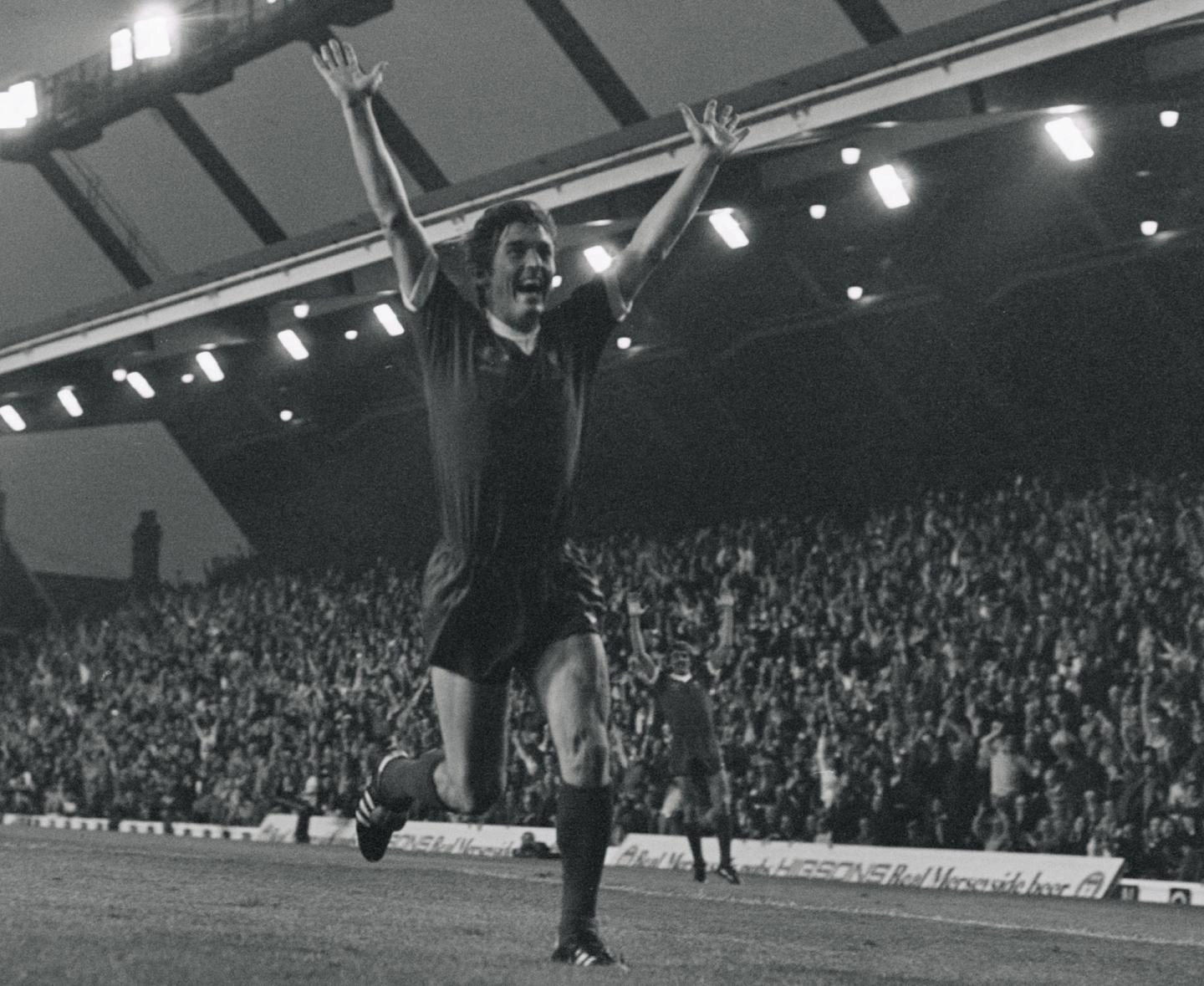
That first campaign culminated in Dalglish supplying the winner in the 1978 European Cup final against Club Brugge.
A deft and decisive dink over the goalkeeper at Wembley that night was a stroke of the genius possessed in his boots.
It was the first of three captures of Old Big Ears.
Just as often as scoring, it was the No.7’s ability to create that had supporters purring, spotting a pass that no-one else in the stadium could see.
Indeed, in each of the eight seasons from 1978 to 1986 he tallied a minimum of 15 assists, rising to 24 on two separate occasions.
The telepathic partnership formed with the prolific Ian Rush had opposition defences scrambling and Liverpool lifting more trophies.
“Kenny was one of these players that you almost felt he could see into the future,” said Jan Molby. “He saw things before anyone else saw them.”
In terms of individual honours, Dalglish was the Football Writers’ Association Footballer of the Year in 1978-79 and 1982-83, also winning the Professional Footballers’ Association Players’ Player of the Year award in the latter season.
The higher-ups at the club felt this footballing master was the natural replacement for Joe Fagan in the dugout when it was vacated in 1985.
Dalglish was appointed player-manager for the start of the next season but very much emphasised the first part of his job title.
A return to the team during that campaign’s run-in ignited a winning streak that led to a league and FA Cup double – his magic displayed with a volley at Chelsea to seal the title.
There remained flashes of brilliance in the subsequent seasons until Dalglish decided to take on the managerial position solely.
His 515th and final occasion pulling on the Liverpool shirt as a player came on May 1, 1990.
Of course, Dalglish’s greatness transcends the football pitch.
A pillar of solidarity and support following the Hillsborough tragedy and to this day an important figurehead, he also answered the club’s call and returned for a second spell as manager in 2011.
In October 2017, Dalglish’s immeasurable contributions to the Reds were immortalised by the renaming of a stand at Anfield after him.
“If the people who matter think I’ve played some small part in the success that we have enjoyed over the years, that is an honour in itself,” he said then.
And asked what LFC means to him, Dalglish summed his emotions up in one word: “Everything.”
Anfield to remember Kevin Keegan with special mosaic
NewsLFC International Academy officially launches in Turkiye
Reaction'We are in a really good way' - Vivien Endemann on pre-season and victory at Man United
VideoWomen's friendly highlights: Manchester United 1-2 Liverpool
Listen now'The Reaction' podcast: Analysis from Newcastle 2-2 Liverpool