

Past managersBob Paisley
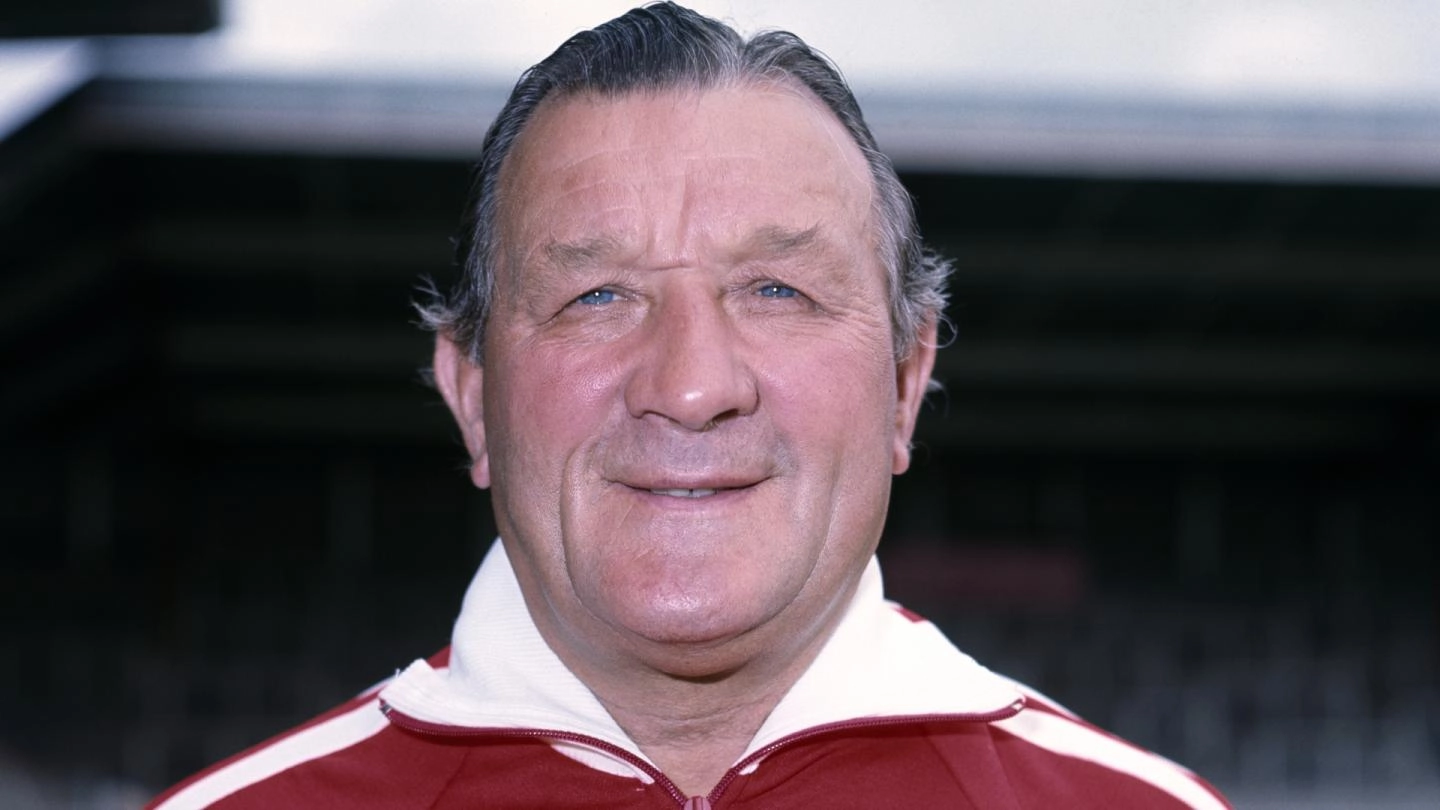
Years: 1974-1983
Matches: 534
Honours: League title (1975-76, 1976-77, 1978-79, 1979-80, 1981-82, 1982-83), European Cup (1977, 1978, 1981), UEFA Cup (1976), League Cup (1981, 1982, 1983)
Thirteen major trophies in nine seasons - not bad for a man who was loathe to make the step into football management. But then, that was the reluctant genius Bob Paisley.
The humble son of the north east always was more at ease in the wings than centre stage. When it came to knowledge of the game and the ability to spot a player, though, his record spoke volumes.
Born in the County Durham village of Hetton-le-Hole on January 23, 1919, Paisley's childhood was spent absorbing knowledge and advice.
As his late widow Jessie recalled: "Bob always tried to remember what his headmaster told him; that if you speak softly, people will try to listen to what you're saying. If you shout, they're liable to walk away and not take it in."
Such homespun psychology would serve Paisley invaluably during his management years as Europe bowed to the stocky figure in a flat cap that belied a masterful football brain.
Following in the footsteps of the great Bill Shankly was a task many believed akin to mission impossible and yet Paisley's transition from Boot Room coach to boss was almost seamless.
It all came about in July 1974, when Shankly rocked the football world by announcing his retirement from the game.
Who would be brave enough to take on a role in which the shadow of the great Scot would loom large? The Liverpool board had only one name on their shortlist.
Paisley had flanked Shankly's shoulder from the day he arrived at Anfield in 1959, and was a pioneer of 'the Liverpool way', the brand of football that was pivotal to Shankly's football ethos.
He also had a relationship with the club that stretched back even further than his predecessor's, one that began two decades earlier when he had arrived at Anfield as a 20-year-old left-half on May 8, 1939 for a £10 signing-on fee and weekly wage of £5.
Post-playing, Paisley established himself in a role as a reserve-team trainer and also became a renowned, self-taught physiotherapist.
He was the perfect foil for Shankly, a football lover with an unquenchable thirst for knowledge but one that was happy to leave the limelight to the man with a flair for public speaking.
It needed much persuasion from the club and his family to convince Paisley to take on the challenge awaiting him after Shankly's departure.
After much soul-searching, he agreed, saying: "It's like being given the Queen Elizabeth to steer in a force 10 gale."
Maybe so, but what a magnificent navigator he would prove to be.
In his first season he led the Reds to the runners-up spot in the league, an outcome he was disappointed by, remarking at the time, "I was like an apprentice that ran wide at the bends."
That may seem somewhat harsh, but he made amends for what he saw as failure the following year, guiding the club to a league and UEFA Cup double.
The title was secured with a famous 3-1 win at Wolverhampton Wanderers on the final day of the season, while a 4-3 aggregate success over Belgian outfit Bruges delivered the European honour.
It was a season that would have been difficult to surpass for most sides and yet in the following campaign Paisley's Liverpool would do just that.
Having retained the league title with consummate ease, it could have been an all-conquering year for the Reds had they seen off Manchester United in the FA Cup final.
However, luck was with the opposition as they ran out 2-1 winners - not the best preparation for Liverpool's first ever European Cup final appearance.
But Paisley's men shrugged off their Wembley disappointment to go on and conquer the continent for the first time just four days later.
Rome was the setting for what Paisley would later refer to as his "perfect day", with the Reds claiming a 3-1 victory over a strong Borussia Monchengladbach side.
The triumph immortalised Paisley as the first English-born manager to lift Europe's greatest prize following the success of Scottish duo Jock Stein (Celtic) and Sir Matt Busby (Manchester United).
As the celebratory champagne flowed, Paisley, who was later honoured with an OBE, sat quietly in a corner of the team hotel. "I'm not having a drink because I want to savour every moment," he said. "The Pope and I are two of the few sober people in Rome tonight!"
The Roman carnival also heralded the end of Kevin Keegan's fine Anfield career and many forecast it would be the end of an era for the club.
But they reckoned without Paisley's unique eye for talent.
He swooped to sign Celtic hero Kenny Dalglish for less than the income from Keegan's transfer. It was an inspirational move; Dalglish would surpass the achievements of Keegan and secure his place as the undisputed King of the Kop.
"There's never been a better bit of business than that," beamed Liverpool chairman John Smith.
Few would argue with such a statement, although Paisley's supreme ability in the transfer market was nothing new to Reds fans.
He had already captured the likes of Phil Neal, Terry McDermott, Joey Jones and David Johnson, while his decision to switch Ray Kennedy from a powerful striker to a left midfielder was a masterstroke.
As he often said: "I let my side do the talking for me."
Indeed, what he may have lacked as an orator, he made up for with a record on the pitch that spoke volumes.
Few managers can claim to have brought through so many of the greatest players of the post-war era.
Alan Hansen, Graeme Souness, Alan Kennedy, Ronnie Whelan, Ian Rush, Craig Johnston, Mark Lawrenson, Bruce Grobbelaar, Steve Nicol - the list seems endless.
With the help of these players he soared into the stratosphere of managerial glory by guiding Liverpool to two further European Cup triumphs.
A win over Bruges at Wembley in 1978 saw the Reds retain the trophy, while the mighty Real Madrid were defeated three years later in Paris.
Paisley's teams clinched a total of six championships, the most remarkable being in 1978-79 when they emerged with a record 68 points under the old two-points-for-a-win system.
That campaign also saw them concede a record low of 16 goals in their 42 games, with 85 scored and only four defeats.
He also guided Liverpool to a hat-trick of League Cup successes, failing only to land the FA Cup.
That gap in his collection was bearable given his catalogue of accolades, and he passed command of the Reds on to Joe Fagan in 1983.
On retirement, he was elected to the board of directors and was an advisor to Dalglish as Liverpool's first player-manager, before sadly being stricken with Alzheimer's disease.
"There was only one Bob Paisley and he was the greatest of them all," said Dalglish. "He went through the card in football. He played for Liverpool, he treated the players, he coached them, he managed them and then he became a director.
"He could tell if someone was injured and what the problem was just by watching them walk a few paces. He was never boastful but had great football knowledge. I owe Bob more than I owe anybody else in the game. There will never be another like him."
Souness saluted him thus: "When you talk of great managers, there's one man at the top of the list and that's Bob Paisley."