
NewsLiverpool's Greatest - No.5: John Barnes
Years: 1987-1997
Appearances: 407
Goals: 108
Trophies: First Division (1987-88, 1989-90), FA Cup (1989, 1992), League Cup (1995)
It is impossible to overstate John Barnes’ impact as a magnificent footballer for Liverpool and a trailblazing character in society.
Signed from Watford in the summer of 1987, the flying winger bedazzled Anfield with his outrageous skills: speed, grace, strength, finishing, crossing and dribbling, to name only some.
The club’s highest-profile Black player at the time, he broke down barriers on the top stage of English football too.
During an era in which racial abuse was common inside and outside stadiums around the country, Jamaica-born Barnes’ world-class ability and dignity supplied an inarguable response to such abuse.
Kenny Dalglish, the manager who signed him, had predicted big things from Barnes.
“Some people seem surprised that a player of such obvious individual skill as John should come to a club like Liverpool, whose success has been based on teamwork, but I think he will complement us and vice versa,” wrote Dalglish after his arrival.
“I have admired him for a long time. We know he has the speed and ability to go past people and not only is he one of the best, if not the best crosser of a ball in British football, he will contribute a great deal to the team effort.
“He is never shy of going back to help out in defensive situations and, of course, at set-pieces he can be a menace to the opposition.”
Kopites had to wait until mid-September for the first home match of 1987-88, and for many it was a first chance to see the Reds’ new No.10 wearing the Liver bird.
An assist and a goal from Barnes before half-time in a 2-0 defeat of Oxford United ensured no anticlimax.
A month later, his fabulous brace against Queens Park Rangers at Anfield – with the second goal a solo run from the halfway line – had supporters purring.
Continuing to shine brightest in a team considered among the finest throughout LFC’s history, Barnes racked up 35 goal contributions across all competitions as Dalglish’s side won the league title in sublime style.
His fellow professionals and writers responded by awarding him PFA Player of the Year and FWA Footballer of the Year.
The blot of defeat by Wimbledon in the 1988 FA Cup final was righted in the 1989 edition as Liverpool defeated Everton 3-2 in the showpiece at Wembley.
And Barnes’ brilliance was a bedrock of the Reds’ 1989-90 championship success, with 22 goals and 12 assists in the league leading to a second FWA honour as well.
Undoubtedly his peak years, plenty fortunate enough to witness them are of the view that few players were better in the whole of world football at the time.
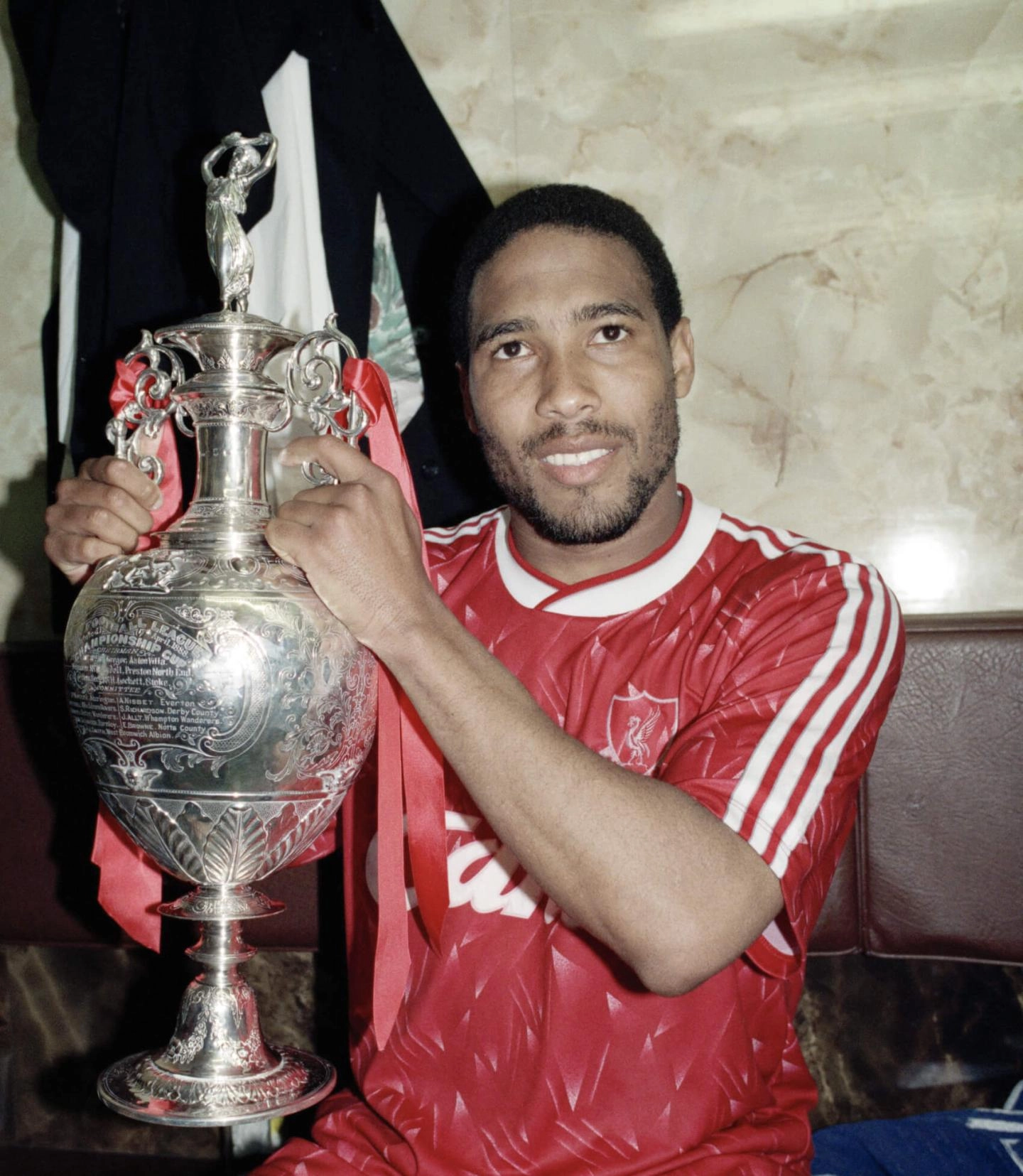
A more difficult period followed in the early ’90s, with Dalglish departing as manager and injuries – including a ruptured Achilles – taking away the acceleration that had been key to Barnes the winger.
There was a fear he may actually never be able to play again.
But he returned and, in response, became Barnes the central midfielder, using his technical prowess and game intelligence to dictate play from the middle of the pitch. And added more than 200 appearances.
‘Digger’ also captained the Reds, passing on his experience as a new generation began to step up to senior level under Graeme Souness and then Roy Evans in the dugout.
Collective achievements were by now proving elusive, though, aside from a League Cup triumph at Wembley in 1995.
After a decade on Merseyside, more than 400 games and more than 100 goals, he said farewell and joined Newcastle United in August 1997.
“The way to succeed in life is no different to the way to succeed in football,” said Barnes. “Hard work, effort, commitment and humility.”
John Barnes certainly succeeded.
NewsInternationals: Wirtz captains Germany and Dutch win on special night for Van Dijk
NewsVirgil van Dijk reaches landmark of 100 international caps for the Netherlands
Guest blog'Not many people can say they recorded a music video at Anfield at 3am...'
Media watchBarcelona WILL sell Spanish midfielder to Liverpool on ONE condition
ReactionGrace Fisk: We're really disappointed but we need to learn from this